
 | Prof. Weihua ZhuangFellow of the Canadian Academy of Engineering, IEEE Fellow University of Waterloo, Canada Bio: Weihua Zhuang is a University Professor and a University Research Chair of Electrical and Computer Engineering at University of Waterloo, Canada. Her research focuses on network architecture, algorithms and protocols, and service provisioning in future communication systems. She was the Editor-in-Chief of the IEEE Transactions on Vehicular Technology from 2007 to 2013, General Co-Chair of 2021 IEEE/CIC InternationalConference on Communications in China (ICCC), Technical Program Chair/Co-Chair of 2017/2016 IEEE VTC Fall, and Technical Program Symposia Chair of 2011 IEEE Globecom. She served as the President of the IEEE Vehicular Technology Society in 2023-2024. Dr. Zhuang is a Fellow of the IEEE, Royal Society of Canada, Canadian Academy of Engineering, and Engineering Institute of Canada. Speech Title: Intelligent Network Management for 6G Abstract: The 6G networks are expected to support a wide range of diverse use cases and applications, along with a significant increase in user data traffic. Artificial intelligence (AI) will be deeply embedded in the design and operation of the networks. Specifically, 6G will transition from an information-centric architecture, which connects people and devices, to intelligence-driven architectures that facilitate seamless data sharing, processing, and mining across devices, the edge, and the cloud within the network. This presentation will examine various aspects of integrating AI into network architecture and operations for intelligent network management and service provisioning. We will introduce a holistic network virtualization architecture designed to support AI functionalities and deliver customized services. Additionally, we will explore meta-learning to address non-stationary system dynamics in network management, with cooperative perception among nearby connected and autonomous vehicles as an application example. We will conclude by discussing the challenges and opportunities associated with network management automation, harnessing the advancements in AI technology. |
 | Prof. Markus RuppIEEE Fellow Technische Universität Wien, Austria Bio: Markus Rupp (Fellow, IEEE) received the Dipl.-Ing. degree from the University of Saarbrücken, Germany, in 1988, and the Dr.-Ing. degree from Technische Universität Darmstadt, Germany, in 1993. Until 1995, he was a Postdoctoral Researcher with the University of California at Santa Barbara, Santa Barbara, CA, USA. From 1995 to 2001, he was with the Wireless Technology Research Department, Nokia Bell Laboratories, Holmdel, NJ, USA. Since 2001, he has been a Full Professor of digital signal processing in mobile communications with Technische Universität Wien. Speech Title: Digital Twins (DTs) in wireless communications Abstract: Wireless communication networks are entering an era of unprecedented complexity. With the transition from 5G to 6G, technologies such as massive MIMO, network slicing, non-terrestrial networks (NTN), and integrated sensing and communication (ISAC) are pushing current planning and optimisation methods beyond their limits. Traditional simulation tools—highly successful in the design phase—are no longer sufficient to support real-time operational decisions in rapidly changing environments shaped by mobility, traffic dynamics, and evolving urban infrastructure. This talk introduces the concept ofDigital Twins (DTs) in wireless communications, highlighting their role as the next evolutionary step beyond classical link-level and system-level simulators. A digital twin is not merely a model, but a continuously updated virtual representation of a live network system, driven by real-time telemetry and measurement feedback. By combining calibrated physical wireless models with operational network abstraction layers, digital twins enable prediction, optimisation, and closed-loop control of real networks. This opens the door to self-healing networks, proactive maintenance, and safe AI training environments—without risking disruption of critical services.The talk will provide an overview of the historical roots of simulation and the emergence of the digital twin paradigm, followed by key use cases including geo-spatial propagation modelling via ray tracing, anomaly detection for predictive maintenance, AI-based resource management, and energy-efficient “green networking” through adaptive sleep modes. Looking ahead toward 6G standardisation, digital twins are expected to evolve from management tools into core architectural elements of autonomous networks, enabling large-scale integration of terrestrial and satellite infrastructures, centimetre-level localisation, and real-time situational awareness. Finally, open challenges such as computational scalability, uncertainty quantification, the privacy/security of operator data, and stability in closed-loop control will be discussed, outlining promising research directions toward trustworthy, real-time-capable wireless digital twins. |
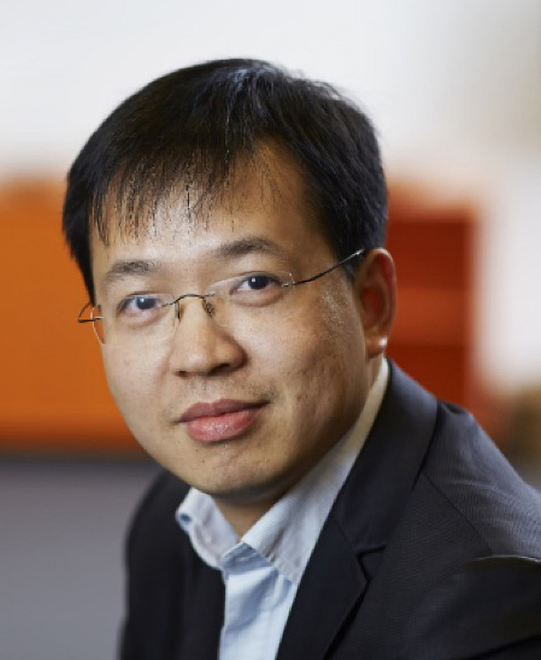 | Prof. Yan ZhangIEEE Fellow University of Electronic Science and Technology of China, China Bio: Yan Zhang is currently a Full Professor with University of Electronic Science and Technology of China, China. His research interests include next-generation wireless networks leading to 6G, green and secure cyber-physical systems. Dr. Zhang is an Editor for several IEEE transactions/magazine. Since 2018, Prof. Zhang has been listed as a Highly Cited Researcher by Clarivate Analytics (i.e., Web of Science). He is Fellow of IEEE, Fellow of IET, elected member of Academia Europaea (MAE), elected member of the Royal Norwegian Society of Sciences and Letters (DKNVS), and elected member of Norwegian Academy of Technological Sciences (NTVA). Speech Title: Edge Computing Power Networks Abstract: This talk first introduces the fundamental concepts and system models of edge computing power networks, offering an overview of their architectural design and operational principles. It then focuses on several emerging and distinctive research challenges in this area, including optimal resource allocation, the trade-off between energy efficiency and privacy preservation, cooperative mechanisms among distributed nodes, and the integration of electrical power and computational resources. Finally, it highlights potential future application scenarios and outlines key open research problems and directions in edge computing power networks. |
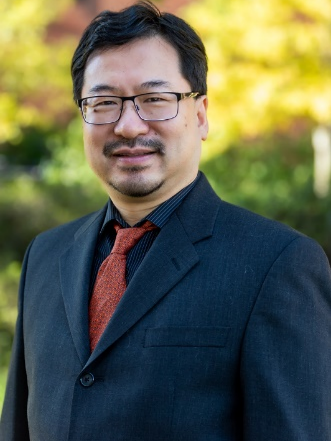 | Prof. Shiwen MaoIEEE Fellow Auburn University, USA Bio: Shiwen Mao is a Professor and Earle C. Williams Eminent Scholar Chair, and Director of the Wireless Engineering Research and Education Center (WEREC) at Auburn University. Dr. Mao's research interest includes wireless networks, multimedia communications, smart health, smart grid, and machine learning. His work has been recognized by many research and service awards from the IEEE. He is a Distinguished Lecturer of IEEE ComSoc, the Editor-in-Chief of IEEE Transactions on Cognitive Communications and Networking, and an Associate Editor-in-Chief of IEEE Internet of Things Journal. He is a member-at-large of ComSoc Board of Governors (BOG) (2025-2027), ComSoc Director of Magazines (2026-2027), ComSoc Technical Committee Board Director (2022-2025), and the Vice President of Technical Activities of IEEE Council of RFID (2024-2027). He was the General Chair of IEEE INFOCOM 2022, a TPC Chair of IEEE INFOCOM 2018, and a TPC Vice-Chair of IEEE GLOBECOM 2022. He has served as the General Chair, TPC Chair, or Symposium/Track Chair of numerous IEEE/ComSoc conferences, including INFOCOM, ICC, and Globecom. He is a Fellow of IEEE. Speech Title: Cloud Computing Meets Functional Data Analysis for Wireless and Network Intelligence Abstract: Cloud computing underpins modern data infrastructure and continuously generates high frequency telemetry from IoT sensors, serverless functions, and virtualized resource logs. Similar time varying data streams arise across intelligent transportation systems, wireless sensing platforms, and connected device ecosystems. Such observations are inherently functional in nature, better modeled as smooth trajectories evolving over continuous domains rather than as isolated tabular records. Yet most analytics pipelines remain rooted in discrete machine learning models that overlook temporal continuity, cross trajectory dependence, and latent functional structure. Functional Data Analysis (FDA) provides a principled statistical framework for modeling data at the function level through smoothing, basis representations, and covariance driven dimensionality reduction. Despite its strong theoretical foundations, FDA remains underutilized in large scale computing and sensing systems due to gaps between statistical methodology and engineering deployment. This talk highlights FDA as a unifying modeling paradigm for time varying data, presenting recent work in traffic flow modeling, RF sensing, RFID signal analysis, and device fingerprinting. Across these domains, functional representations demonstrate improved robustness to noise and missing data, enhanced interpretability of temporal dynamics, and stronger cross domain generalization, positioning FDA as a scalable foundation for modern cyber physical analytics. |
 | Prof. Fredrik TufvessonIEEE Fellow Lund University, Sweden Bio: Fredrik Tufvesson received his Ph.D. in 2000 from Lund University in Sweden. After two years at a startup company, he joined the department of Electrical and Information Technology at Lund University, where he is now professor of radio systems. His main research interest is the interplay between the radio channel and the rest of the communication system with various applications in 5G/6G systems such as massive MIMO, distributed MIMO, mm wave communication, vehicular communication, integrated communication and sensing, and radio-based positioning. Fredrik is fellow of the IEEE and has authored around 130 journal papers and 200 conference papers. Speech Title: Distributed MIMO for communication and sensing, from measurements to models Abstract: Distributed MIMO systems are envisioned to support ultra-reliable low-latency communication (URLLC) and sensing functionality to enable applications such as compute offloading, wireless real-time control, and reliable monitoring. However, the use-cases have not really taken off yet. Based on indoor D-MIMO channel measurements at mid-band we will highlight the potential for delivering URLLC and sensing functionalities in future wireless systems. We discuss channel properties and outline modelling approaches for distributed MIMO in indoor scenarios. |
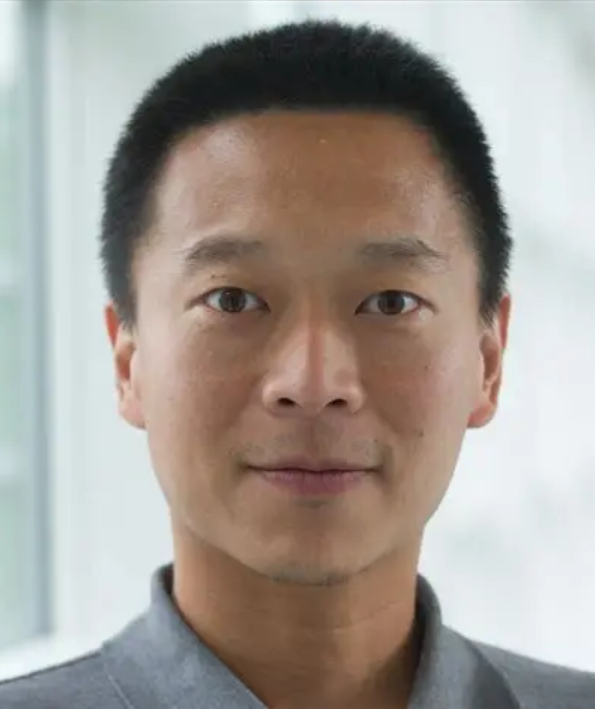 | Prof. Tian Hong LohIEEE Fellow National Physical Laboratory, U.K. Bio:Tian Hong Loh (Fellow, IEEE; Fellow, AAIS) received his Ph.D. degree in Engineering from the University of Warwick, Coventry, U.K., in 2005. Since then, he has been with the UK National Physical Laboratory (NPL), where he is currently a Principal Scientist and the Science Area Leader for NPL’s Electromagnetic Technologies Group. In this role, he leads a multidisciplinary team of scientists conducting pioneering research in applied electromagnetic metrology and measurement science to support the development and deployment of emerging electromagnetic technologies. He is also a Visiting Professor at the University of Surrey and plays a prominent leadership role within the international scientific community. He serves as President of the International Union of Radio Science (URSI) UK Panel, chairs several leading international technical groups, including the Measurement Working Group of the European Association on Antennas and Propagation (EurAAP), the UK Node of the Antenna Measurement Techniques Association (AMTA), the IEEE Technical Committee on Antenna Measurements (TCAM), the URSI Commission A on Electromagnetic Metrology, Measurements and Standards. He also represents the IEEE Antennas and Propagation Society (AP-S) on the IEEE Future Directions Committee (FDC) and IEEE Future Network Technical Community (FNTC). Prof. Loh has made significant contributions to the fields of antenna measurements, wireless communications, and applied electromagnetics. His research interests include 5G and 6G communications, smart and reconfigurable antennas, electrically small antennas, metamaterials, body-centric communications, wireless sensor networks, electromagnetic compatibility, and advanced computational electromagnetics. He holds several patents, edited the book Metrology for 5G and Emerging Wireless Technologies (IET, 2021), contributed numerous book chapters, and authored or co-authored more than 250 peer-reviewed publications. His work has helped shape international measurement standards and best practices for emerging wireless technologies. Speech Title: Measurement Techniques for Emerging Wireless Technologies: Trends, Challenges, and Recent Advances Abstract: The digital economy is a key driver of growth, increasingly shaping social and business activities. Rising demand for high-speed, reliable connectivity across diverse applications is accelerating the adoption of advanced wireless technologies. To meet these needs, systems are expanding across new spectrum bands, with growing integration of satellite and terrestrial networks in the evolution towards 6G. This shift brings greater user density and more complex, global connectivity requirements. Rigorous antenna and propagation channel characterisations are essential to ensure performance and compliance with safety standards and are performed worldwide for product validation. With the industrial adoption of complex new radio signals and multi-antenna technologies in the emerging wireless systems, several worldwide industries, research communities, and standard bodies are now facing new measurement challenges on testing to verify products that meet the intended performance parameters demanded by diverse technological requirements. This talk provides an overview of recent advances in measurement techniques for next-generation wireless technologies, alongside international R&D efforts, and capabilities at the UK National Physical Laboratory (NPL). Topics include over-the-air (OTA) testing for multiple-input-multiple-output (MIMO) and massive MIMO, sub-THz channel characterisation, millimetre-wave beamforming with large-scale phased arrays, reconfigurable intelligent surfaces, and integrated sensing and communication (ISAC). |
 | Dr. Bo GaoIEEE Member, Wireless Senior Expert ZTE Corporation, China Bio: Bo Gao has received the Ph.D. degree in the department of Electronic Engineering from Tsinghua University, Beijing, China, in 2015. From 2015, he serves as the MIMO project manager in wireless algorithm department in ZTE Corporation. His work has been recognized by many research and patent awards. He is a 3GPP Feature-Lead of 6G MIMO beam management, besides for holding three other 5G topics, including 5G UL power control and MIMO topic(s), as Feature-Lead(s). He has authored over more than 60 families of 5G Standard Essential Patents (SEPs), and published two edited books for 5G massive MIMO and ICT standardization, respectively. His research interests include 5G/6G communications, massive MIMO, distributed MIMO/cell-free, and the practical system implementation for wideband communication systems. Speech Title: Multi-antenna scheme for 6G new radio interface Abstract: As sixth-generation mobile communication (6G) from forward-looking technology research to standardization and practical implementation, multi-antenna transmission technology is emerging as a core focus, in 6G new radio interface, for enhancing signal quality and system capacity for 6G networks. This talk provides an overview of multi-antenna transmission technologies for the new 6G air interface, based on the latest 3GPP standardization progress. First, this talk reviews the evolution of multi-antenna technologies from 4G to 5G. Next, this talk identifies the challenges in realizing the 6G vision, including the expansion of new frequency bands, substantial improvements in edge-user performance, network energy efficiency, and seamless user handover. Underlying the comprehensive research, this talk then elaborates on multi-antenna transmission technologies currently under discussion in 3GPP, including: a) transmission scheme(s) and reference signal (RS) designs enabling ultra-massive MIMO; b) multi-TRP/beam management for supporting cell-free networks starting from random-access/T0; c) ultimate uplink enhancement; d) DL/UL-CSI acquisition (e.g., downloadable CSI codebook), as well as e) AI/ML-enabled extension for 6G MIMO. |